The Drake Equation

-By Anuj M Medtiya

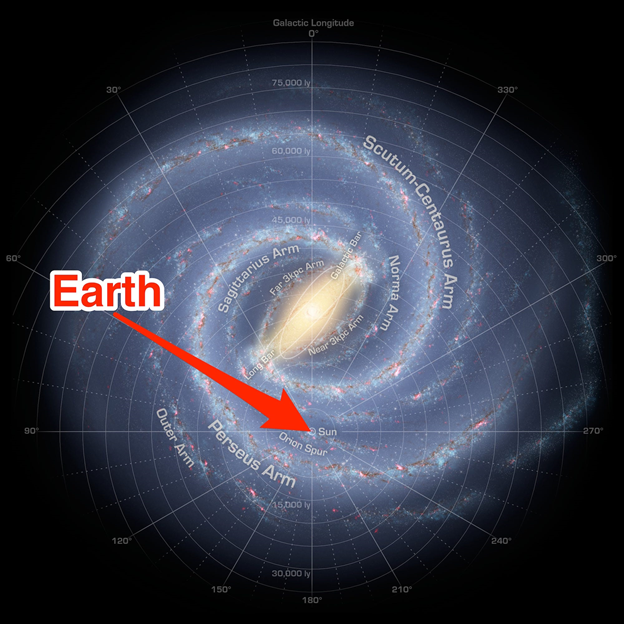
Are we alone in our Milky Way? Or even the universe? Do you ever wonder if aliens exist? If life forms do exist apart from on planet earth, how many different types of life forms and civilizations could exist in this massive universe?
Credits: static-ssl.businessinsider.com

I have always found this topic intriguing after I realized that our planet earth is nothing but a dot in our galaxy, our galaxy is nothing but a small dot in the entire universe, and planets and stars much greater than our Sun exist.

A Harvard professor named Harlow Shapley speculated that the universe has 10 million, million, million suns. Yes, you read correctly. 10 followed by 18 zeros! After his calculations about temperature, water, air etc., he arrived at an estimated figure of 100 million worlds where life could have been formed by evolution! Blimey! Even if life forms do exist on other planets, we cannot know if they are intelligent and scientifically developed to communicate with alien species. Many scientists have tried and are still trying to detect any radio signals from nearby stars and planets similar to ours.
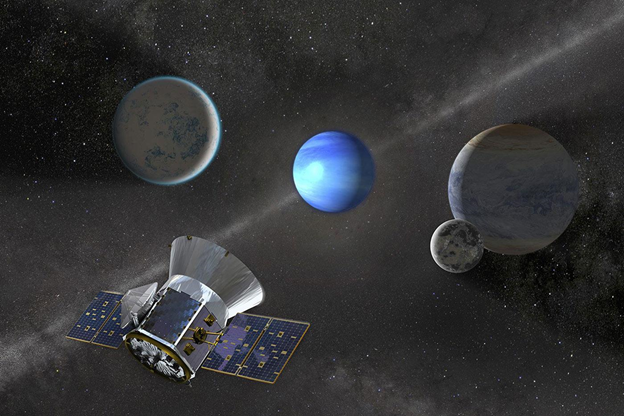
Now, let me tell you about this scientist Dr. Frank Drake. He formulated an equation in 1961 to calculate a precise number of extraterrestrial life forms that were intelligent enough for radio communication. This came to be known as the Drake Equation. I’ll explain the mathematics involved in this astrophysics concept. What exactly is the Drake equation? The Drake equation is:

N = R * fp * ne * fl * fi * fc * L 

You must be wondering that this equation looks really complicated with so many weird variables and not worth your time. But in actuality, it is quite interesting and easy to understand. Let me help you with it. We will take each variable in turn.

1) R 

Did you know that new stars keep forming in the interstellar space due to concentration of clouds of dust and gas? Well, you do now. This variable represents the average rate of such star formation in our galaxy.

2) fp

As new stars are formed, some may have planets while some may not. Like the sun in our solar system has 8 planets, including Earth, revolving around it. This variable represents the fraction of those stars which may have planets. (E.g. if 10 stars are formed and only 5 have planets, the fraction will be 5/10)

For understanding the following variables, let us make a few assumptions about our solar system which will help you understand the concept better. 

a. We will assume that Earth, Mars, Jupiter and Saturn all have habitable life supporting conditions such as air, water and food similar to that of Earth.

b. We will also assume that Earth, Mars and Jupiter have actual civilizations of living beings but Saturn does not.

c. Now we assume that life forms on Earth and Mars develop into intelligent life forms.

d. But, only the life forms on Earth have developed a technology which can be used for communication into space.

You will now understand more clearly why we made such assumptions.

3) ne

This variable represents the average number of planets which can potentially support life per star. In our example, our Sun (star) has 4 planets supporting life (Earth, Mars, Jupiter and Saturn).

4) fl

This variable represents the fraction of planets that could support life that actually develop life at some point of time. In our example, out of 4 planets which could support life, 3 have actually developed life forms. (fraction is 3/4) (Earth, Mars and Jupiter).

5) fi

This variable represents the fraction of planets with life that actually go on to develop intelligent life (civilizations). In our example, 2 out of 3 planets (2/3) with life actually had intelligent life civilizations (Earth and Mars), while Jupiter had primary unintelligent life forms such as plants and/or animals which are uncivilized.

6) fc

This variable represents the fraction of civilizations that develop a technology that releases detectable signs of their existence into space such as radio signals or other type of communication. In our example, 1 planet i.e. Earth out of the 2 planets with civilizations (Earth and Mars) (1/2) had actually developed radio technology for communication with outer space.

And lastly,

7) L

This represents the length of time for which such intelligent civilizations with developed technology release detectable signals into space. For example, let us assume that Earth released its radio detectable signals into space for 150 years and then stopped. So, L will be 150 years.

Thus, by multiplying these 7 variables, we finally arrive at:

8) N

This is the number of civilizations in our galaxy with which communication might be possible.

Here is a gist of the above explanation with a few pictures.

Credits: static-ssl.businessinsider.com

You must have noticed the colored bar in the photo at the top which tells us the certainty with which the values for these set of variables can be predicted or calculated. You can see that the variables are arranged in a decreasing order of certainty, which means that as we progress towards the right, the values become more and more difficult to estimate and are more hypothetical which we do not have the proof of.

Enough with the complexity of it. Let’s look at some of the interesting estimates calculated by some of the Oxford researchers who reformulated the Drake equation to arrive at these results.

The authors calculated that there is a 41% chance that we are alone in the galaxy Milky Way which seems very high. They also calculated that there is a 32% chance that we are alone in the entire universe. Let me show you how big the universe is!

Credits: en.wikipedia.org/wiki/Universe

You can see innumerable galaxies some small and some big. Milky Way is just one of them!

I hope you enjoyed this article and learnt something good from it. My inspiration behind this topic was “Doctor” Sheldon Cooper from the show ‘The Big Bang Theory’ where he recites the entire Drake Equation with its meaning. Season 2 Episode 20 – ‘The Hofstadter Isotope’ for the fans who would like to revisit it or you can also find it on YouTube. Thus, we can marvel at the brilliance of Dr. Frank Drake and see how math is an important aspect of Astrophysics.

References – https://en.wikipedia.org/wiki/Drake_equation https://www.businessinsider.in/science/space/scientists-use-this-formula-called-the-drake-equation-to-explore-the-chance-well-make-contact-with-intelligent-aliens/articleshow/64833968.cms

Mom-Mother Of Mathematics

-By Simran M Karkera.

Mom-the person who integrates the whole family and adds meaning to our lives! Owing to the different roles that she performs, it is not wrong if we call mothers supercomputers. From time management to optimum use of resources, mothers just take care of it all! But while looking at the broader picture, we often fail to realize how they intricately use statistical, analytical and so many mathematical tools daily. This thought is quite unexplored as we often relate Math with complexity and moms with simplicity. Surprisingly, Math is supposed to make our lives easy and moms are by far the most twisted beings for a layman to understand!

This fact was beautifully portrayed in the movie “Mission Mangal”. Right from the inception of the mission, the scientist cum mom used home-science tools. Even as the mission progresses, the portrayal of how moms use unique methods to work within the constraints was just magical. The film was lauded by the audience and critics alike. But they never realized that they may be failing to realize this same magic in their daily lives.

Let’s take it one step at a time. Starting from the most basic or routine work i.e. cooking.

Behold the Euclidian!

For cooking:

Ratios: Be it simple breakfast or complex meals, moms know just the right spice to be added and the perfect ratio of it. It’s no child’s play to balance the strong flavors of every spice! The next time you devour a scrumptious meal and wonder how it is so wholesome and tasty, make sure to compliment your mom for managing her ratios well.

Geometry: That part of math which is believed to be omnipresent is not left out either when our mothers work. Once, when I was moping the floor, my mom pointed out the fact that instead of doing it in circles, I could do it in a line starting from the very end of the room. This way, I don’t end up haphazardly leaving some spaces or falling down by slipping on the wet patches. Although the falling still continues to happen with/without water, mom made me realize how the fundamentals of geometry can used so effectively even in such a basic task!

“Geometry is the art of correct reasoning from incorrectly drawn figures.”

Henry Poincare’

Statistician In The House:

For trends and budgets

Oh how we struggle every month with our pocket money! The expenses seem to be never ending and finally there’s no choice but to ask for that “extra allowance”. But for once, think how your mom manages all the expenses every month- right from groceries to our pocket money. But still manages to save some! And all this, without the help of any software to calculate. Mothers will also tell you the previous month’s figure and predict what she expects the next month’ s expenses to be (and they don’t even need a graph or equation for the trend analysis). They also unknowingly use the decision tree concept which helps them determine the best course of action and plan for contingencies.

Trend analysis

Arrangement, Permutations and Combinations: Be it a small three sectional cupboard or a huge wardrobe, they perfectly know how to ace the space. Being the messy person that I am, my cupboard is always scrambled or is flowing like a river when opened. Once, my mom made me clean my own cupboard. Half of my time went in trying to figure out how to arrange so much in so less space while my mother could do it in the blink of an eye. After trying various permutation and combinations my mom came to my room. After looking at my baffled expression, with utmost simplicity, she said, “Arrange those gowns horizontally on both sides and then keep your tops in the center”. “Indeed, the perfect arrangement for a small, low -heighted cupboard!”, I exclaimed. But my mom was quick to reply- “There are 2 more ways in which you can arrange them.”

After this incident, I was fully convinced that my mom must have been the brightest math student in her class. For she could easily solve permutation and combination, which majority find quite difficult to understand.

Assignment and Sequencing: This is the most popular and favorite math topic of every child because of its simplicity and ease. The problems related to assignment usually deal with ways to allocate the resources, so as to complete a given task in the best possible way. Everyday, mothers do their work in a fixed pattern. They try to group work like cooking and cleaning in order to ensure optimum use of the resources in fixed time. This simple and overlooked concept is not just an example of effective assignment but also of the multi-tasking and analytical approach that they use in their everyday life.

“Human memory is not merely the repository of information in the brain. It is much more than this, and something that a machine can never be: a power, a force by which we mentally reproduce not just information but also our experiences, by which we shape our perceptions, introspect, interpret and analyze the direction our life has taken.”

― Shakuntala Devi.Super Memory: It Can Be Yours.

The alchemy of math is something we can experience everyday in our lives and the best example of it would be – our moms!

The probability of us being able to manage our homes and lives without our moms and magical math is far less than the probability of having a real life Hogwarts built some day! As the previous blog addressed how math haters can turn into math lovers, this blog tries to highlight how math can be used in everyday life with the help of that one person who is the secret superstar of the family. No one else but the one who leads the orchestra of life to create the perfect symphony.

credits:freepik.com

Why Is Math Hated? (And How To Fix It?)

-By Vanshika Paharia

“In a world where everything involves math, from your tangled earphones to the strands of hair on your head- you can love it or hate it, but you cannot ignore it.”

-Someone who herself hated math always

But the terrible fact is that 24% students hate math and 30% are indifferent to it. In today’s date, your profession doesn’t matter. Math is a must and knowing mathematical and statistical concepts is a requisite. From integration and how to derivate a formula or solving an equation through synthetic division- math is necessary. Yet, math is the most disliked subject.

What we never sit down to dissect – why is math passionately hated throughout the world? When mathematicians and the remaining 46% of the students are able to find magic in math, why can’t everyone? Hence, I decided to think and mull over this. And came up with a few interesting points. Now, I can’t make you love this subject in one day but I can certainly tell you how to fix this hatred for it. I think you will learn to love math later through our blogs as we progress with the year at MSCNM.

De-mystifying maths – tackling students' fears and making maths clear |  Gordon Franks Training
Credits: gordanfrankstraining.co.uk

Why Do People Hate Mathematics and Statistics?

We can say, “I don’t like Maths and Stats. That’s it. No reason at all,” all we want. But that will not make it true. I am listing quite a few reasons here and trust me, one of them will be relatable.

1. Fear: Fear is a deadly feeling. And the fear of being wrong is even more catastrophic. Unlike English and creative writing, mathematics cannot have 5 different answers to everything. Only one answer is correct and the fear that you may get that answer wrong opens your mind to the prospect that you are not always correct and are imperfect.

That one wrong answer can haunt you. Especially if you know that seldom, if the answer goes wrong in an exam when it shouldn’t, it can make or break you. This fear gets turned into deflection, which turns into hate later. It is very important to remember that wrong answers are not a bad thing and they don’t mean you are not worthy. We will come to the solution for this later. This is the biggest problem you can face with math.

2. Conceptual Issues: In our life, we had that one moment when a teacher was teaching a math concept and our attention got diverted. Or maybe that teacher was just not that good. I get it, her fault. But later, it was your fault for not revisiting the concept when you missed it out.

Such concepts find place in bigger and more important math sums. And when we try these math sums and are not able to solve them, we panic and avoid. Eventually, we hate it. The trick is to do a root cause analysis there itself and go back to revisiting the concept. More on this later.

3. Laziness: Innate laziness in every person makes them to not want to solve sums unless they have a calculator on stand by. This is a problem because unless you take efforts to solve sums, you will never like them. Solving sums requires presence of mind and proactiveness, and thus a lack of it can result in sums going wrong. You will soon find yourself in a loop of laziness and a fear of going wrong.

4. Boredom: Most people, while studying math, don’t relate it to the outside world. They do not understand the applications of math, leading to boredom. All they see is numbers and not what the numbers can do. This can also be termed as lack of connection and relatability.

5. Lack of Simplicity: What most teachers, books and articles don’t do is simplify math. They say the same thing in such a twisted way that none can understand. “The summing of infinite numbers between 2 numbers through a certain equation” – sounds easy right? It is nothing but integration. One of the “toughest” to grasp concepts. It all depends on the material you are reading and trying to understand. If you deep dive into the blue cheese, it will always taste bad. Try the normal cheese first, study math in simple words first.

6. Incapability to Remember: Maths and Stats use a lot of rules and formulae. Remembering them is important and most people cannot do this due to lack of presence of mind. This is also directly related to messed up concepts. Mugging up does not work in maths, concepts do.

7. Lack of Practice: Lack of practice is honestly the worst. You may not know this but lack of practice is the causation of all the other 6 reasons. It is deadly and thus, all the other 6 problems must be fixed immediately. The other 6 are a root cause of this problem.

Fixing it

I know the problem now. How to fix it?

The effectiveness of this solution will depend on your perseverance and mental strength. Your will to make amends and to learn plays a huge role. Do these and I assure you, 95% of the times it works for willing and hardworking people.

1. Eliminate the Fear: Mathematics involves making a lot of mistakes and making mistakes is scary. But it is a part of learning. This is something you have to tell yourself every time a sum goes wrong. Your work is to try the sum again and work on your mistake. Someone told me, “Making a mistake in a sum is not wrong. But if I give you one more sum of the same type to try, you should be able to solve it. It is called learning from your mistakes.” Learn from your mistakes, review your errors and let them go. Also, accept that you are a normal human being and not Shakuntala Devi. I am sure even she made mistakes. Also, sums going wrong is due to less practice. Funny how lack of practice can find its place in fear too. Self pep talks, practice and learning is important.

2. Clear your Concepts: Cannot solve a sum or making an error? Go back, read and understand the concepts. Stop cutting corners and trying to solve sums without clearing your concepts. Cannot solve integration? It is because you don’t understand derivatives. Cannot understand derivatives either? Probably because you don’t understand what limits are. Perform a root cause analysis. Maybe even go through all basic concepts.

3. Stop being lazy: You cannot understand even the M of Math if you don’t want to try. Chuck the calculator and solve a few basic sums everyday. It will improve practice, will be fun, will reduce errors and will improve speed and thinking. At least, try some Logical Reasoning MCQs online.

4. Bye Boredom: Math is boring? Listen to music while solving Math. Will be less boring. Other than that, go understand the application of Math. Also, allow me to recommend you a few math based books and movies that will truly help you connect more-

  • The Man Who Knew Infinity – Movie
  • Shakuntala Devi – Movie
  • The Imitation Game – Movie
  • The Man Who Loved Only Numbers by Paul Hoffman – Book
  • The Black Swan by Nassim Nicholas Taleb- Book
  • Pi – Movie
The Man Who Knew Infinity (2015) - IMDb
Source-imdb.com

5. Simplify: Complicated math language- go search on the net for basic understanding. Or watch some comprehensive videos.

6. Incapability to remember– Practice more. Mugging up is not necessary. You will start remembering everything if you keep practicing. Even while solving sums or learning- presence of mind is required. Do not multitask.

7. Practice makes a man perfect– Fix the other 6 issues, I think 80% of your issues will disappear automatically. Take out time everyday just to practice mathematics.

PrACTice like a Champion.”

Trust me, there is no running away from math. Every CA, law or political studies student thinks his or her stream is an escape from math. 5 years later, they find themselves preparing for some post graduate entrance which requires math skills. Also, no one is “not a math person”. Everyone was born a lump with no likes or dislikes. If you cannot run away from it, beat it. Over a course of the next few months, we will tell you why math is important, with an aim to increase your understanding of the subject.

A Tricky Problem

By Neel Shah

A simple math problem that has a tricky solution .
Question:-
Alice and Bob can complete a job in 2 hours. Alice And Charlie can complete the same job in 3 hours. Bob and Charlie can complete the same job in 4 hours. (They work at a constant rate)
So how long it will take if three work together??
Seems simple right?
One college professor explained, nearly all seniors were unable to solve the problem,because they set up incorrect equations.
Normally people make equations assuming Alice as a, Bob as b and Charlie as c.
Equations that are formed are:-
a+b=2
b+c=3
a+c=4
By adding all equations we get:-
a+b+b+c+c+a=2+3+4
2a+2b+2c=9
2(a+b+c)=9
a+b+c=4.5
According to this solution if three of them worked together to complete the job then it will be done in 4.5 hours which is wrong because even though all three are working together then also the time taken ie. 4.5 hours, is more than the time taken if any combination of two people work together.
So what went wrong?
The equations that are made does not make any sense. Common mistake people make is that they consider names of people as variables (in this case Alice as a,Bob as b, and Charlie as c)
So what should be the correct approach?
We know that Alice and Bob will take two hours to complete a job. This means if we add up the percentage of the job Alice did and the percentage of the job done by Bob, the result will be 100% or 1.
(%job Alice does in 2 hours) + (% job Bob does in 2 hours) = 1
Since each works at a constant rate, the amount of work each does in two hours is twice the work done by each of them in 1 hour.
So we have equation:-
2(%job Alice does in 1 hours) + 2(% job Bob does in 1 hours) = 1
Now let’s set up the variables:
a= % job Alice does in 1 hour
b= % job Bob does in 1 hour
We then have the equation:-
2a+2b=1
We can similarly write:
c=% job Charlie does in 1 hour.

Now we can set up the other equations.
For Alice and Charlie complete the job in three hours we have:-
3a+3c=1

For Bob and Charlie complete the job in four hours we have:-
4b+4c=1
So our three equations are:-
2a+2b=1
3a+3c=1
4b+4c=1
We could solve the equations, but we are interested in how long it takes all 3 people to do the job working together. So we need to solve for t in the equation:
t(a+b+c)=1
For the first three equations we take L.C.M to get same coefficient for all variables by multiplying equation 1 by 6, equation 2 by 4 and equation 3 by 3, we get equations:-
12a+12b=6
12a+12c=4
12b+12c=3
Now we add up all equations
We get:-
24(a+b+c)=13
In 24 hours all three of them complete the job 13 times. So we divide by 13 to get the number of hours taken to complete the job 1 time.
(24/13)(a+b+c)=1
The correct answer is all three working together would take 24/13 hours, about 111minutes or 1 hour 51 mins, to complete the job.

Artificial Intelligence

By Rutu Shah

What is Artificial Intelligence? 

Artificial Intelligence (AI) is intelligence demonstrated by machines, in contrast to the natural intelligence displayed by humans.

How does AI work?

AI works by combining large amounts of data with fast, iterative processing and intelligent algorithms, allowing the software to learn automatically from patterns or features in the data.

 It uses algorithms and historical data to create something called a propensity model. Propensity models will then start making predictions.

Fun facts:

  • Warner Brothers to use AI to decide the best time to release movies.
  • 8 Indian Airports selected to test AI-run baggage screening system.
  • Samsung has unveiled “Artificial Humans”, called as NEON, that can talk like humans with emotions.
  • SEBI to tap AI, big data analytics to curb market manipulation.
  • AI accurately identifies brain tumor.
  • Facebook trains AI robot to navigate ‘without a map’.
  • Chinese primary schools have got kids to wear “mind-reading” headbands to ensure they pay attention in class.
  • Clix capital, NBFC, has developed advanced statistical and machine learning models in-house and makes use of it while sanctioning every loan.

Their next focus is video analytics, wherein video snippets during loan application stage are collected and emotional sentiment analysis shall be used to predict willingness and ability to pay.

  • Recently, 931 cases of fraudulent ITC (input tax credit) claims were identified using data analytics.
  • Icelandic singer Bjork uses AI to create music that changes with the sky.
  • IIT Kharagpur develops AI-powered tech for reading legal cases.
  • Visit health, a startup tapped into OPD Market, which stands for $5-6 billion, using AI.

This AI driven platform helps patients consult doctors, get diagnostic tests, manage lifestyle issues, and offers OPD cost cover too.

  • Mitsuku is a bot used to fight depression. It was introduced in year 2013.
  • 2020 is the year wherein we’ll know the result of japan deploying hundreds of bots for Olympics. 

Whom can AI aid?

  • Benefits Mangers:

Benefits managers administer a company’s employee benefits program, which may include retirement plans, leave policies, wellness programs, and insurance policies such as health, life, and disability. They select benefits vendors and manage enrolment, renewal, and delivery of benefits to the organization’s employees. 

As businesses are expanding, benefits and compensation management systems are getting automated thus saving a lot of time and effort.

  • Delivery Partners:

 Get ready to have your courier and other mailing services delivered by drones and robotic devices as delivery partners will no longer be needed. 

The government has asked to get the drones registered by 31stJanuary,2020.

  • Proof-readers:

These tools primarily comprise of self-checking mechanisms and applications that detect grammatical errors and plagiarism and even correct the sentences on their own. 

An example of one such tool is Grammarly.

  • Book-Keeping Professionals:

Tools and applications such as MS Office, QuickBooks, and several other improving technologies and increased adaptation of these tools will make this the job extinct.

The job of book-keeping professionals will no longer need a human for keeping books in check. In fact, this job is already on a path of decline with an expectation of an 8% reduction by 2024

  • Computer Support Specialists:

Automated systems like chatbots use available content to answer FAQs and address customer support questions.

  • Data Analyst:

The application of AI in marketing predominantly involves analysing data insights and automating content.

  • Receptionist: AI shall also undertake the tasks of a receptionist, using the raw data available, process it and draw meaningful insights.  

Why securing AI systems makes sense?

And how can it be done?

AI training data and ML models will need to be protected by techniques like homomorphic encryption, which performs complex mathematical operations on encrypted info without decrypting it first.

Organizations will need to protect their AI models against concept drift, as it can make an AI model irrelevant and cause the system to lose control.

Indian Government is working on implementing a data protection law similar to the European Union’s GDPR.

Organizations will pay closer attention to protection techniques such as Data Loss Prevention (DLP), & Endpoint Detection and Response(EDR).

IBM urged govt. and industry to jointly develop standards to measure and combat potential discriminations.

Few Companies With AI Base:

TEMPUS

Industry: Healthtech, Biotech, Big Data

What it does: Tempus uses AI to gather and analyze massive pools of medical and clinical data at scale. The company, with the assistance of AI, provides precision medicine that personalizes and optimizes treatments to each individual’s specific health needs; relying on everything from genetic makeup to past medical history to diagnose and treat.


DATAROBOT

Industry: Big Data, Software

What it does: DataRobot provides data scientists with a platform for building and deploying machine learning models.

NARRATIVE SCIENCE

Industry: Big Data, Software

What it does: Narrative Science creates natural language generation (NLG) technology that can translate data into stories.

COGNITIVESCALE

Industry: Software, Cloud

What it does: Cognitive Scale builds augmented intelligence for the healthcare, insurance, financial services and digital commerce industries. Its technology helps businesses increase customer acquisition and engagement, while improving processes like billing and claims.

ALPHASENSE

Industry: Fintech

What it does: AlphaSense is an AI-powered search engine designed to help investment firms, banks and Fortune 500 companies find important information within transcripts, filings, news and research. 

NEURALA

Industry: Machine Learning, Software

What it does: Neurala is developing “The Neurala Brain,” a deep learning neural network software that makes devices like cameras, phones and drones smarter and easier to use. Neurala’s solutions are currently used on more than a million devices. Additionally, companies and organizations like NASA, Huawei, Motorola and the Defense Advanced Research Projects Agency (DARPA) are also using the technology.

NUTONOMY

Industry: Automotive, Transportation

What it does: With a mission to provide safe efficient driverless vehicles, Nutonomy is developing software that powers autonomous vehicles in cities around the world. The company uses AI to combine mapping, perception, motion planning, control and decision making into software designed to eliminate driver-error accidents

PERSADO

Industry: Adtech, Software

What it does: Persado is a marketing language cloud that uses AI-generated language to craft advertising for targeted audiences. With functionality across all channels, Persado helps businesses increase acquisitions, boost retention and build better relationships with their customers.

X.AI

Industry: Machine Learning

What it does: X.AI creates autonomous personal assistants powered by intelligent technology. The assistants, simply named Amy and Andrew Ingram, integrate with programs like Outlook, Google, Office 365 and Slack, schedule or update meetings, and continually learn from every interaction.

BLUE RIVER TECH

Industry: Agriculture, Robotics, Software

What it does: Blue River Tech combines artificial intelligence and computer vision to build smarter farm tech. The company’s See & Spray machine learning technology, for example, can detect individual plants and apply herbicide to the weeds only. The solution not only prevents herbicide-resistant weeds but reduces 90% of the chemicals currently sprayed. 

INSILICO MEDICINE

Industry: Biotech

What it does: Insilico Medicine is using artificial intelligence for anti-aging and drug discovery research. The company’s drug discovery engine contains millions of samples for finding disease identifiers. Insilico is used by academic institutions, pharmaceutical and cosmetic companies.

NVIDIA CORPORATION

Industry: Hardware, Software

What it does: Nvidia Corporation builds graphics processing units and hardware to power various types of AI-enabled devices. The company’s technology is used for everything from robots and self-driving vehicles to intelligent video analytics and smart factories.

ORBITAL INSIGHT

Industry: Big Data, Software

What it does: Orbital Insight uses geospatial imagery and artificial intelligence to answer questions and gain insights invisible to the naked eye. Using data from satellites, drones, balloons and other aircrafts, the company can provide insights and forecasts to the agriculture and energy industries that normally wouldn’t be available.

SIFT SCIENCE

Industry: Security

What it does: Sift Science provides multiple fraud management services all in one platform. Sift uses thousands of data points from around the web to train in detecting fraud patterns. The technology helps payment processors, marketplaces, e-commerce stores and even social networks prevent fraud. 

DECODING VEDIC MATHS

-KHUSHI DEORA

  • Veda is a Sanskrit word which means ‘Knowledge’.
  • Vedic Mathematics is a system of mathematics which was discovered by Indian mathematician Jagadguru Shri Bharathi Tirthaji in the period between A.D. 1911 and 1918. 
  • The most striking feature of the Tirthaji system is its coherence. The whole system is interrelated and unified. 
  • The 16 ‘Sutras’are based on the 4 ‘Vedas’, namely, ‘Rigveda’, ‘Yajurveda’, ‘Samaveda’, ‘Atharvaveda’ on which the entire system of Vedic Mathematics is based. 
  • Multiplication shortcuts in Vedic Maths :

     996  (-4)

          x 998   (-2)

994/008

  • Both the numbers are closer to 10 power (base 1000).
    • 996 is 4 less thab 1000 and 998 is 2 less than 1000.
    • (-4)*(-2)=8. Since base is 1000, use 008.
    • 996-2 or 998-4 =994.
    • Final answer= 994008.
  • Calculating Squares in Vedic Maths :
Trick to square a number in Vedic Mathematics
  • Division shortcuts in Vedic Mathematics :
  • 9 is 1(deficiency) less than 10(nearest power of 10). (that 1 is written in white colour below divisor in example)
  • Split Dividend in 2 parts (Quotient & Remainder) in such a way Remainder to have same number of digits as that of Divisor. In this case, its 1 digit.
  • Take 1st digit – 2 down as it is.
  • Multiply the above deficiency (1) with the 2 and put below 4 and add them column wise to get 6.
  • Multiply deficiency (1) by 6 and put below 3 and add column wise to get 9.
  • As last column is filled, we stop the process.
  • We know the concept that Remainder can never be>=Divisor, as Remainder 9 is = our Divisor 9, we divide 9 by 9 to get Quotient 1 and Remainder as 0.
  • Add the Quotient 1 to original Quotient 26 to get 27
  • Thus Quotient=27 & Remainder=0.
  • Square root calculations in Vedic Maths :

2209.

  1. Number ends with 9, Since it’s a perfect square, square root will end with 3 or 7.
  2. Need to find 2 perfect squares (In Multiples of 10) between which 2209 exists.
    Numbers are 1600(402) and 2500(502).
  3. Find to whom 2209 is closer. 2209 is closer to 2500. Therefore, square root is nearer to 50
    Now from Step 2, possibilities are 43 or 47 out of which 47 is closer to 50
  4. Hence square root = 47.
  • There are 16 such Jaw dropping Sutras or Formulas which solve all known mathematical problems in the branches of Arithmetic, Algebra, Geometry and Calculus. They are easy to understand, apply and remember. 

Ever wondered why earphones get tangled?

A research paper titled Spontaneous knotting of an agitated string by Dorian M. Raymer and Douglas E. Smith of the University of California at San Diego Department of Physics, demonstrated this phenomenon
In the abstract, the researchers wrote: “It is well known that a jostled string tends to become knotted; yet the factors governing the “spontaneous” formation of various knots are unclear. We performed experiments in which a string was tumbled inside a box and found that complex knots often form within seconds.”

Knot theory is an area of mathematics that studies knots, as the name suggests, but not just the types of knots we are accustomed to — it has applications in biology, quantum computing, chemistry, and many other fields. In math, knots are always studied in closed loops and a knot is defined as a configuration that cannot be untangled into a simple loop. They are classified based on their number of crossings. Two knots are considered equivalent if one can be transformed into the other without detaching the ends.

The real question here is: How can the researchers’ experiments with string in boxes help us keep our headphones untangled? Here are some of their useful results:

“Tripling the agitation time caused a substantial increase in P, indicating that the knotting is kinetically limited.” This line means that the longer you store your headphones for, the more likely they are to get knotted. That makes sense — they have more time to move around and get tangled.

“Above a critical string length, the probability P of knotting at first increased sharply with length.” Thus, the longer your cord is, the more likely it is to get tangled.

“Increasing confinement of a stiff string in a box causes increased wedging of the string against the walls of the box, which reduces the tumbling motion that facilitates knotting.” Here, the researchers noted that a smaller box meant less room for the headphones to move around and get tangled in.

Similarly, when using a stiffer cord, “the tumbling motion was reduced because the finite stiffness of the coiled string tends to wedge it more firmly against the walls of the box.” This means that the stiffer a cord is, the less it bends and moves around — creating knots — in the box.

All this to say, stick with as short and stiff a headphone cord as possible, store them in a small pocket and don’t leave them there for too long. Then again, if — or should I say when — they do get tangled, why not take the time to study the knots? Who knows what you might discover!

It revealed that a cord of less than 46 centimetres in length (about 1 foot six inches) will almost never tangle itself when sealed inside a rotating box for a period.

But between 46 centimetres and 150 centimetres (about five feet), the probability of a knot forming rises dramatically. With a cord longer than that, the probability of a knot forming reaches a plateau of 50 percent.

It turns out that the odds of getting a knot do not go higher because a longer cord gets wedged inside the shape of the box and that prevents further tangles from forming. Raymer and Smith performed 3,415 trials to demonstrate this.

Here is what that curve looks like:

Apple’s iPhone earbuds are 139 centimetres (55 inches) long and thus right at the 50 percent tangle-rate-sweet-spot, at the top of the curve.

In other words, if you place your earbuds in a bag the odds of them tangling into a knot as you carry them around are 50 percent, at least.

“At least” because earbuds are, of course, a Y-shaped string, and thus the knotting frequency is compounded further. (Raymer and Smith didn’t look at strings with more than one branch, but anecdotally I can confirm that the tangle-rate is pretty high.)

Finally, here is a schematic showing how a cord that starts off neatly coiled – (you don’t just stuff them in there, do you?) – quickly becomes tangled inside a rotating box. It shows that one end of a cord only has to cross another part of the cord twice in order to start spontaneously knotting itself:

That last part is perhaps the most magical of all: The research shows that your earphones are indeed spontaneously knotting themselves. Sure, it’s because of their length and the agitation of the container they’re in.

But the knots really do form as a matter of physics, not because of your personal lack of neatness.

Most interesting shapes you have never heard before

By Bhavya shah

When we were kids we were taught different geometric shapes in our school and at our colleges. First we learnt about a line,then about squares,rectangles and circles,then came 3D cubes,cuboids and cones.But our teachers never taught us about the most interesting geometric shape in today’s world.A Möbius strip

What is a Möbius strip?
A Möbius strip(also known as Möbius band or Möbius loop) is a unique surface with only one side and only one edge.This shape cannot be drawn on a piece of paper. This shape is named after a German mathematician August Ferdinand Möbius,who discovered this in September 1858.Another mathematician Benedict Listing also independently discovered the Möbius band.

Möbius Strip and Their Magic
Take a paper strip(about 3cm wide and 12cm long).How many sides and edges does that paper have?If answered two sides and two edges,you are correct.
Now give the strip of paper a half twist and connecting the ends to make a strip. The final output would look like the below image.

The new shape you have just made has only 1 side and 1 edge and is in fact a Möbius strip.To prove that there is only one side ,take a pencil and start drawing a line over the strip and you will have drawn across the entire strip before you reach the starting point.Similarly ,you could check if the strip now has only one edge.

Where will you find Möbius Strips?
The symbol for INFINITY is a Möbius strip.
Giant Möbius strips have been used as conveyor belts on airports as Möbius conveyor belts last longer and require less wear and tear.Scarfs and other clothing items have also been designed as a Möbius strip.

A Möbius resistor was patented by Nikola Tesla in 1894.
Various other applications of Möbius loops are fount in electro-technology and nano-technology.

Adding Möbius Strips Together
When we glue together 2 cubes it makes a cuboid,when you cuboids are glues,it still makes a cuboid,but what would happen if two Möbius Strips would be glued together along their edges?
Turns out,gluing two interesting shapes,creates a new and more complex shape named Klein Bottle ,discovered by Felix Klein in 1882.

Fun Fact:Even though Möbius strips are named after August Möbius,Benedict Listing discovered them first in July 1858.Plus Möbius loops have been in Roman mosaics dated circa 200-250 AD.

An Ode To Ramanujan

By Poojan Sarvaiya

When we first think of Ramanujan, the first thought that hits our mind is the usually known brilliance and the fact that he died at the young age of 32, and the general trivia that he was recently portrayed by Dev Patel in the movie ‘The Man who knew Infinity’ a couple years back.

However, today, on his 132ndbirth date, I attempt to take the reader along with e into a deeper dive into Ramanujan’s life, and understanding the psyche that drove the person into being the underrated legend that he is today.

Ramanujan was born in a lower middle class family and throughout his life, was plagued with health and personal problems, in spite of which he was credited with having compiled more than 3800 identities, equations and results, mainly in the fields of mathematical analysis, number theory and infinite series, all of which have proven correct owing to the advanced skills at hand today, which is precisely the reason why it is shocking that he was able to conjure up thee proof a decade back, without any substantial backing of scientific study or suitable guides before he reached Cambridge and was under the tutelage of Professor GH Hardy. An event that substantially demonstrates Ramanujan’s mind when it came to numbers is the popularly known 1729 incident, best explained in the words of Professor Hardy, relating a personal incident regarding Ramanujan-

I remember once going to see him when he was ill at Putney. I had ridden in taxi cab number 1729 and remarked that the number seemed to me rather a dull one, and that I hoped it was not an unfavourable omen. “No,” he replied, “it is a very interesting number; it is the smallest number expressible as the sum of two cubes in two different ways.”

The two different ways are:

1729 = 13 + 123 = 93 + 103

This incident, although well known, demonstrates the ingenuity of Ramanujan’s brain when it came to numbers, which he regarded not as we do, but rather as living, breathing creatures, each with characteristics of its own, which is probably the reason he was able to achieve this lot in a few years. Another  example is the Ramanujan square which looks something like this-

Can you see what is so unique about the square? The Ramanujan square is an example of a magic square, meaning that the rows, columns and the diagonals add up to the same number. However, if you are somewhat more observant, you will discover that this is not merely a magic square but a super magic square, meaning that the four corners, the four middle squares (17, 9, 24, 89), the first and last rows two middle numbers (12, 18, 86, 23), and the first and last columns two middle numbers (88, 10, 25, 16) all add up to the sum of 139. Look at the photo rather more carefully, here’s the final riposte that will shock you- converting the top row to a date format, ie 22.12.1887, you will find that the date is Ramanujan’s birthday. Shocked? I certainly was. Another interesting fact about Ramanujan is that he was a devout Hindu, and credited his mathematical capabilities to divinity, further believing that the knowledge he revealed was given to him by his family goddess. He once said that ‘An equation has no meaning unless it expresses a thought of God.’ It is certainly interesting to see how a man of science could coexist with religion and hold both on the same pedestal.

Ramanujan’s legacy can be quantified easily with the quote by Freeman Dyson, who said that ‘the seeds from Ramanujan’s garden have been blowing on the wind and have been sprouting all over the landscape.’ And on his birth anniversary, it would be great if we could think once of how much more Ramanujan could have achieved if he didn’t die young and all we can do is emulate his love of a subject in the manner he thought so beautifully in.

How to get your way with Statistics 2.0

If you have read the previous article on “How to get your way with Statistics” you must have surely learned some new tricks to bend math in your favour. In this article we will learn about more such shenanigans and how to see right through them.

(Note: No prior knowledge is required to understand the contents of the following paragraphs. In any case, click on this link to read the first part of How to get your way with statistics:

Tactic 1: Abusing linearity (Lines and Curves)

Every now and then we notice the government giving out tax rebates or relief to companies if they fulfill certain criteria or increasing tax rates to bump up revenue earned. But the opposition always seems to beagainst whatever the government tries to do. This is not only because it is the opposition’s job to do so but also because the result on revenue earned can’t always be positive or even predictable.

Carefully look at this extremely scientific diagram.

This is how we tend to think taxes and revenue work. Increasingtaxes, increases revenue. It does make sense but only on the surface.

The actual relation between Tax Revenue looks something like this:-

This is known as the “Laffer Curve”.

On the left end of the graph the government charges no tax at all resulting in no revenue. However on the other end the government is cleaning up every dime that people earn because taxes are 100%. If every single penny earned goes to the government, why would anyone bother working?

Therefore whether to increase or decrease tax rates depends on where we are! Are we on the left side of the graph where increasing tax rates increases revenues or on the right side where the opposite is true?

However it is a herculean task to determine where exactly we are oreven to conclude whether reaching the top of the graph is the goal.

Reducing tax rates could motivate people to work harder and result in higher long term benefits or it could result in government slacking leading

to poor infrastructure and low productivity of businesses ultimately affecting revenue.

Considering the possibility of the higher class offshoring their economic activity in case of higher rates and similar innumerable intricacies of an economy it is really hard to tell what decision ultimately results in the best outcomes and for whom.

Therefore a Tax-Revenue curve could look anything like this:-

Ultimately what the politicians do is:

It could be the case that reducing taxes results in more revenue.

Iwant it to be the case that reducing taxes results in more revenue. Therefore it is the case that reducing taxes results in morerevenue.

The best thing about the laffer curve is the fact that it not only applies to economics or statistics but even in our personal lives. It subtly teaches us to think in a “non-linear” fashion.

Staying on an excessively rigid diet does of course yield the best results but can you really sustain it for a long time?

Or are you actually sustaining an immensely flexible diet that won’t get you those washboard abs even if you keep it up for years?

The key to know what decision to take depends on a simple mantra.

Which way you should go depends on where you are

What do you think about the laffer curve and linearity? Let us know in the comments section and stay tuned for more math stuff!

Note: The concept explained here is simplified from the book “How not to be wrong” by Jordan Ellenberg

Design a site like this with WordPress.com
Get started